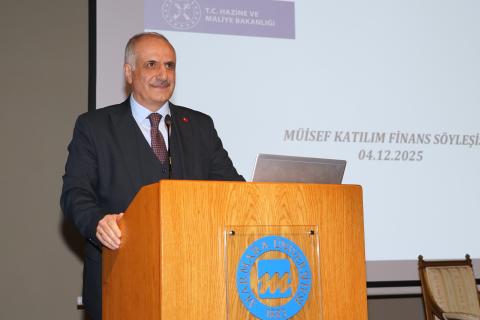
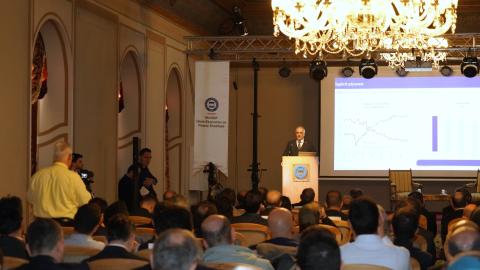
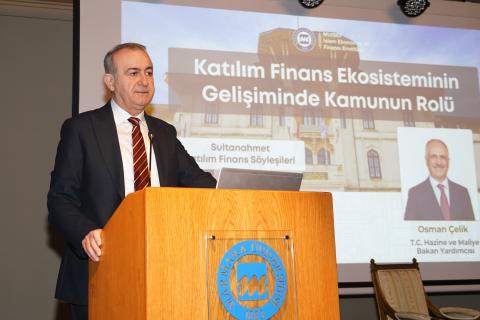
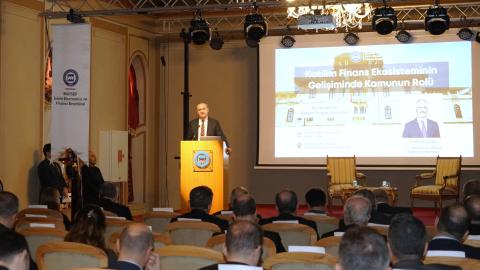
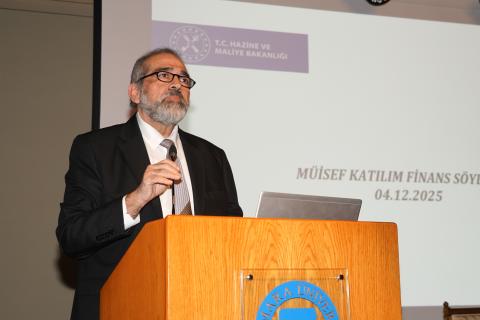
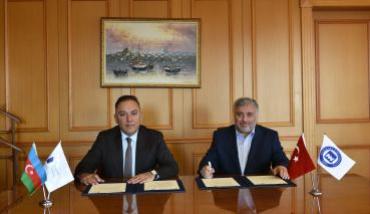
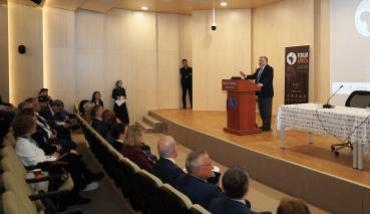
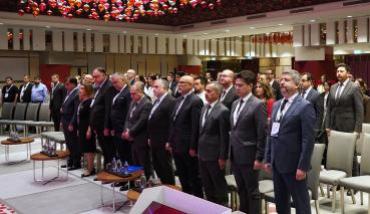
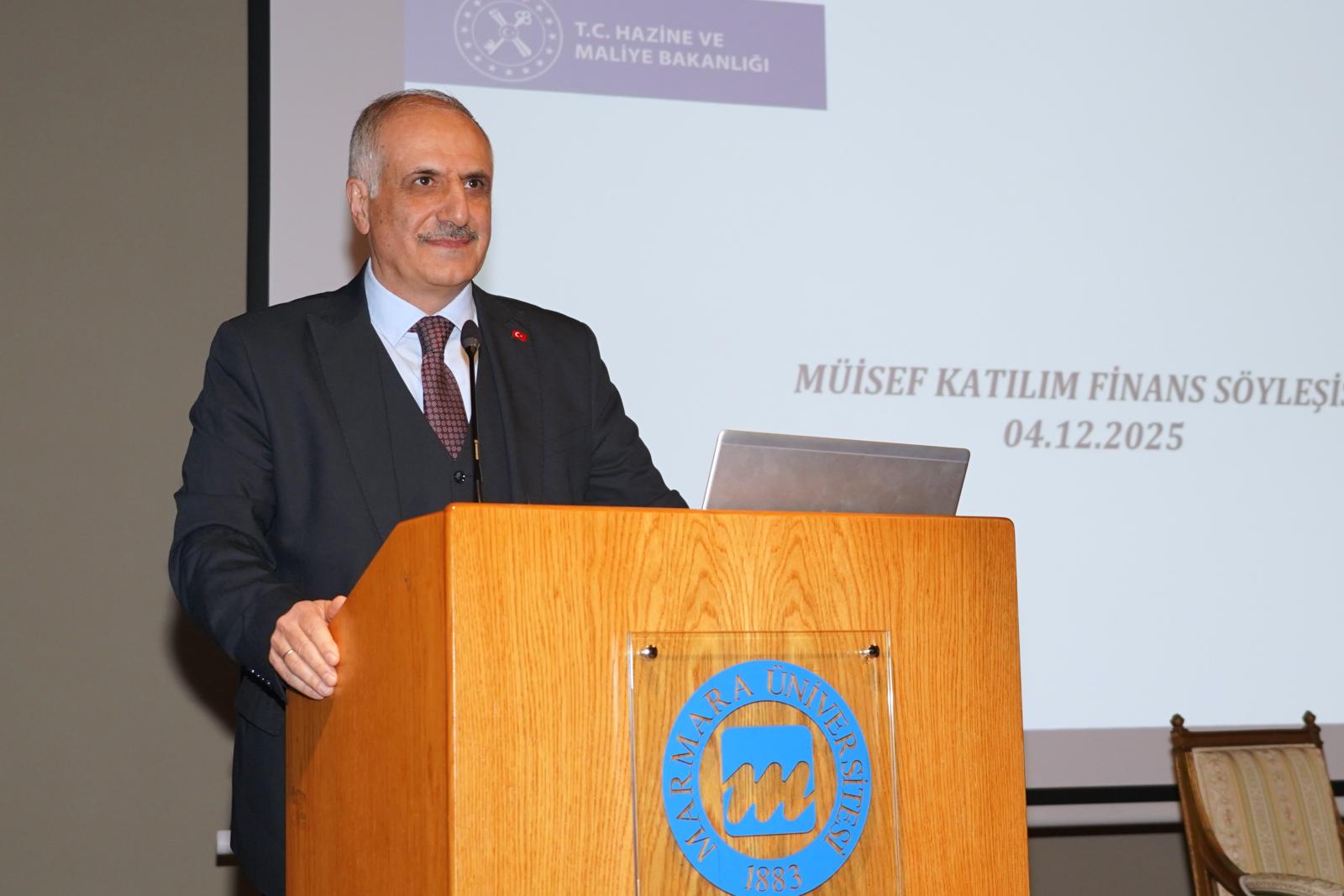
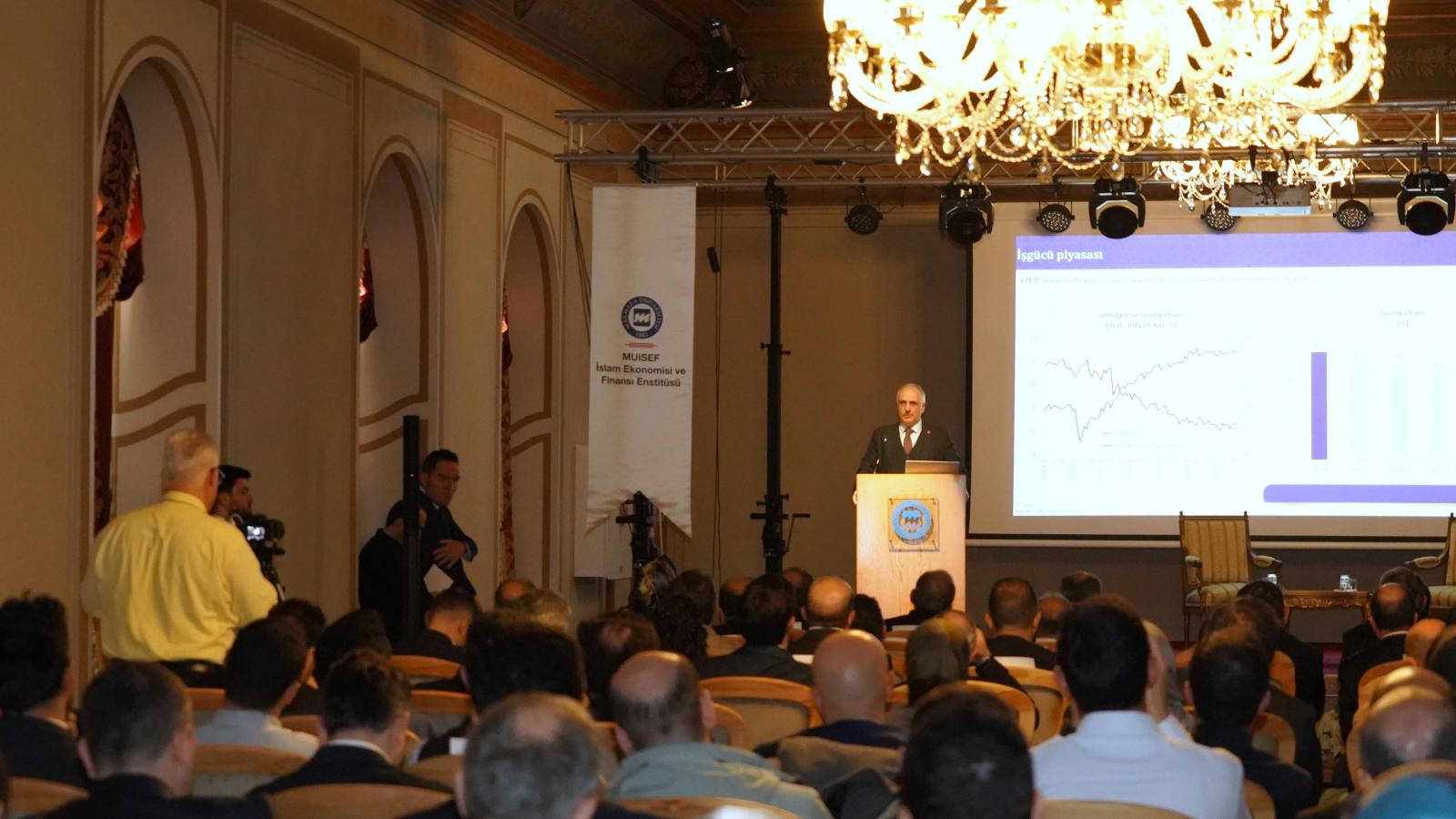
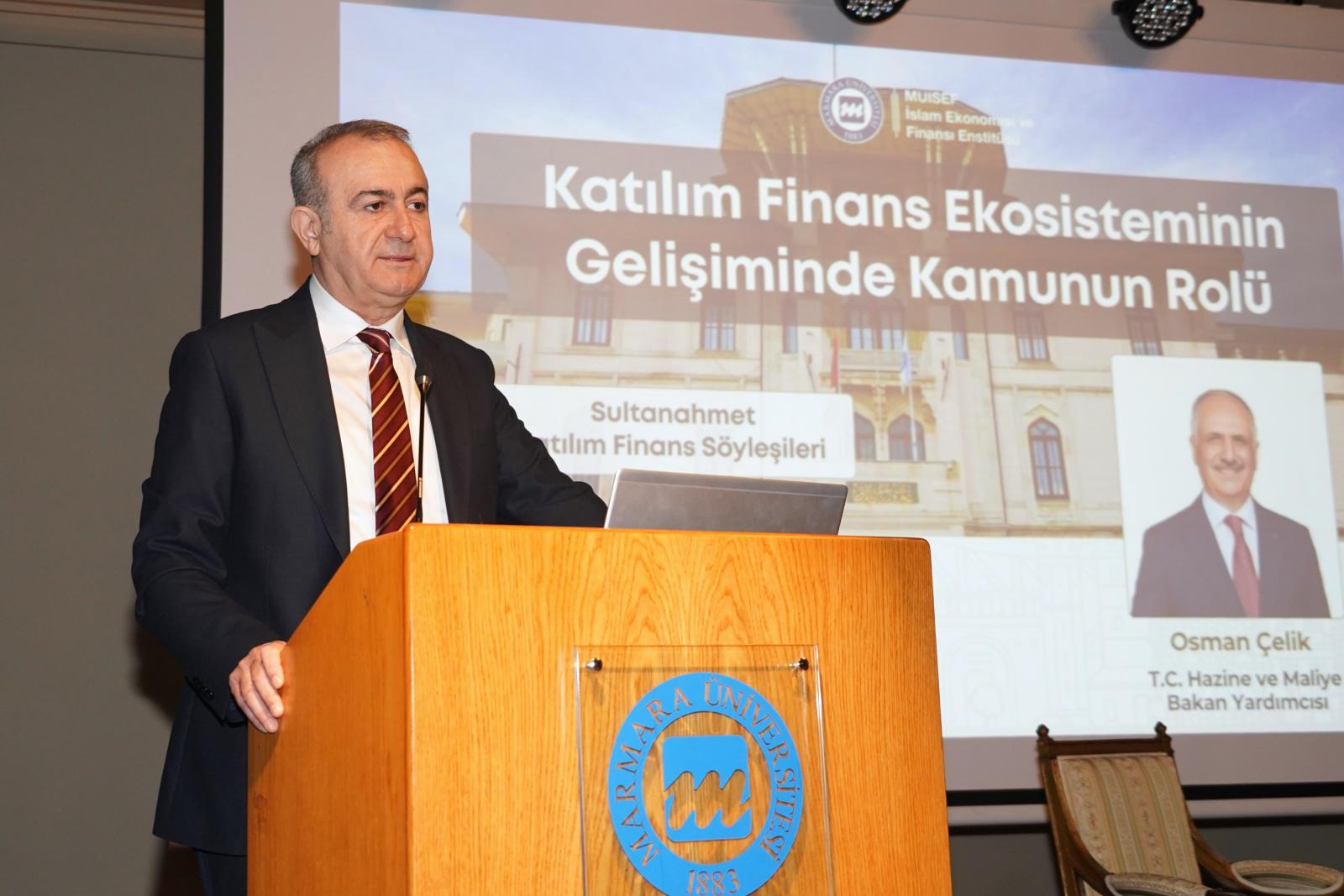
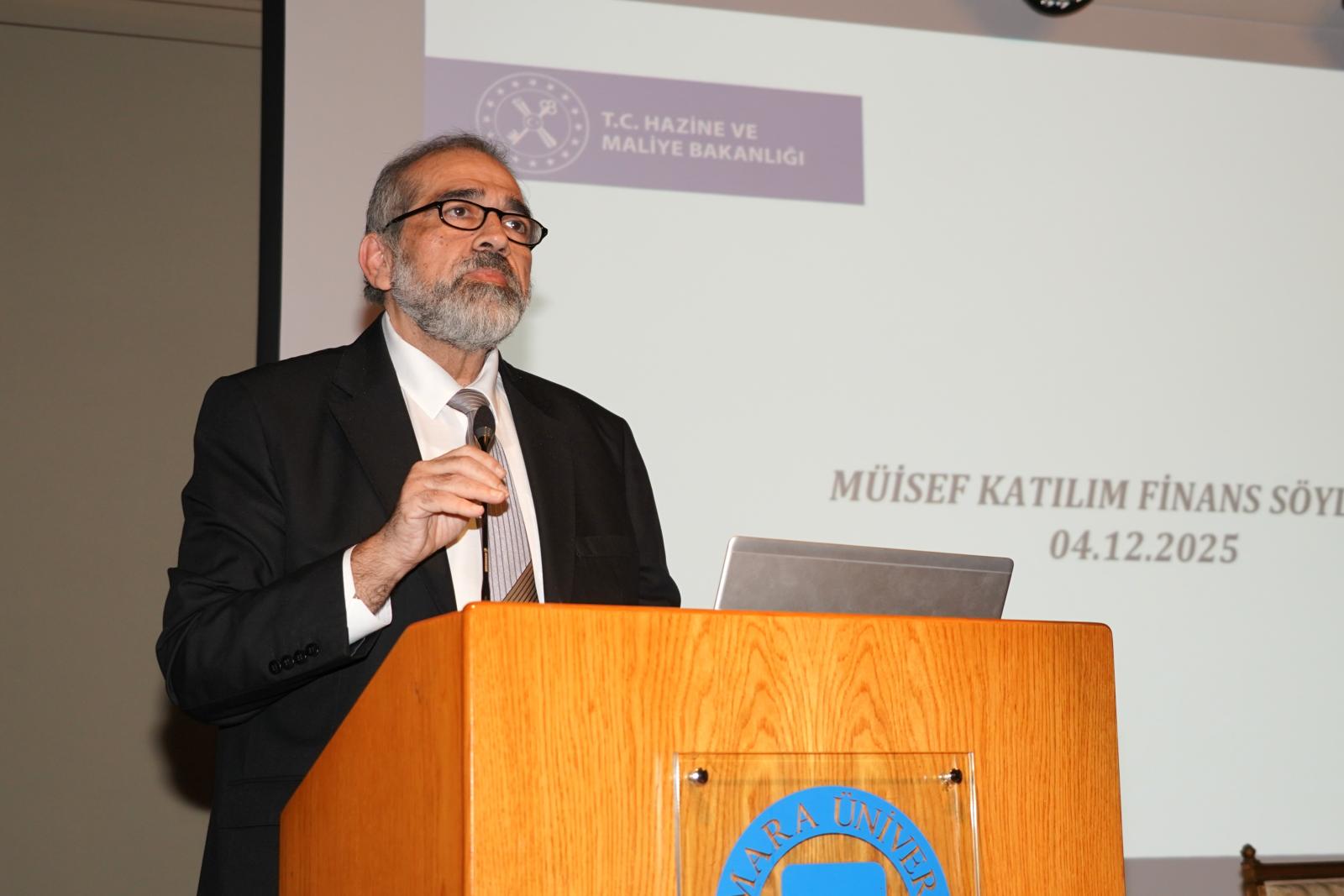
The inaugural event of the Sultanahmet Participation Finance Talks series, organized by Marmara University Institute of Islamic Economics and Finance (MÜİSEF), was held on Thursday, 4 December at the Sultanahmet Rectorate Building. The program, titled “The Role of the Public Sector in the Development of the Participation Finance Ecosystem,” was attended by Deputy Minister of Treasury and Finance of the Republic of Türkiye Osman Çelik, Marmara University Vice Rector Prof. Dr. Yaşar Kabataş, MÜİSEF Director Prof. Dr. Ertuğrul Boynukalın, academics, sector representatives, and students.
Deputy Minister Osman Çelik: “The environmentally conscious structure of participation finance plays a significant and pioneering role in social finance.”
Speaking at Marmara University within the scope of the Participation Finance Talks, Deputy Minister Osman Çelik evaluated the current outlook of the Turkish economy and the structural transformation process in the participation finance sector. Emphasizing that “the ultimate goal of our economic program is to ensure lasting prosperity,” Çelik outlined the main framework of the ongoing economic program. Noting recent economic developments, he stated that Türkiye’s growth in the third quarter of 2025 stood at 3.7 percent, driven by balanced trends in consumption and investment. Highlighting progress in combating inflation, Çelik said, “We have achieved significant advances in the disinflation process.” Referring to financial market risk indicators, he underlined that Türkiye’s credit default swap (CDS) level has fallen below 240 basis points compared to previous years, which he described as an important sign of rising market confidence and declining risk perception towards Türkiye.
Addressing the global Islamic finance ecosystem, Çelik noted the sector’s strong growth: “The global Islamic finance system achieved a robust annual growth rate of 14.9 percent in 2024, with total assets reaching approximately USD 4 trillion.” He also described the entry of public participation banks into the sector, stating that “Ziraat Katılım Bankası, the first public participation bank, began operations in 2015.” He further emphasized the sector’s expansion: “The share of participation banking within the total banking sector, which stood at around 5 percent in 2013, has now approached 10 percent.”
Çelik then discussed the ongoing legislative work on the Participation Finance Law. He noted that once the draft law is enacted, an independent Standards Board will be established to prevent overlaps with existing financial regulatory authorities. He emphasized that the law will not define specific models or products at the statutory level; instead, these will later be developed by qualified committees and the supportive institutions to be established under the new structure. He added that specialized structures unique to participation finance will be set up within sectoral unions, and that the fifth article of the law will strengthen transparency through rating and independent auditing mechanisms.
In the final part of his speech, Çelik addressed digitalization, sustainability, and social finance, highlighting the environmentally conscious nature of participation finance. “The environmentally sensitive structure of participation finance, along with socially oriented practices such as qarḍ al-ḥasan, zakat, and waqf, plays a significant and pioneering role in social finance,” he said. Concluding with a message to young people, Çelik emphasized: “Participation finance is not only a professional field but also a space of vision for the youth.”
Vice Rector Prof. Dr. Kabataş Highlights the Alignment Between the Public Dimension of Participation Finance and Marmara University’s Historical Mission
In his opening remarks, Marmara University Vice Rector Prof. Dr. Yaşar Kabataş expressed his pleasure in welcoming Deputy Minister Osman Çelik to Sultanahmet for a program addressing the role of the public sector in the development of the participation finance ecosystem. Kabataş emphasized that Marmara University— with its 21 faculties, numerous institutes and research centers, and a student body exceeding 70,000— continues its mission as a higher education institution centered on science, public benefit, and societal contribution.
He stated that the university’s extensive academic heritage in economics, finance, public administration, and law has enabled the training of graduates who assume critical roles in both the public and private sectors. Kabataş underlined that discussing the public role of participation finance at Marmara University aligns with the institution’s historical mission, noting that participation finance encompasses a multidimensional approach grounded in ethical principles and oriented toward the real economy, extending across banking, insurance, and capital markets.
Kabataş highlighted the visionary strategies of public authorities in shaping the 40-year evolution of participation finance in Türkiye, emphasizing that regulatory efforts and the involvement of publicly funded institutions have significantly contributed to the sector’s development. He added that the public sector’s holistic approach in recent years has strengthened the visibility of participation finance within Türkiye’s broader economic vision. Concluding his remarks, Kabataş described the program as a strategic platform that brings together public institutions, academia, and sector representatives on a common ground of dialogue, and expressed his hope that the event would generate valuable outputs for both the sector and public policy.
MÜİSEF Director Prof. Dr. Boynukalın: “The Public Sector’s Determining Role Continues in the 40-Year Journey of Participation Finance in Türkiye”
In his opening speech, MÜİSEF Director Prof. Dr. Ertuğrul Boynukalın underlined the decisive influence of the public sector throughout the 40-year development of participation finance in Türkiye. Emphasizing Marmara University’s deep-rooted tradition in economics and commerce since 1883, Boynukalın noted that this institutional heritage has evolved into a formal structure in Islamic economics with the establishment of MÜİSEF— the first and only institute in Türkiye founded in this field through a Presidential Decree.
Drawing attention to the academic legacy formed with the contributions of distinguished scholars such as Mehmet Genç, Sabri Orman, Hayrettin Karaman, and Ahmet Tabakoğlu, Boynukalın emphasized MÜİSEF’s mission to cultivate qualified human capital, conduct scholarly research, and contribute to the field of participation finance by bridging theory and practice in collaboration with the public and private sectors.
Boyalukalın highlighted that the institute currently hosts students from 28 different countries, offering an academic environment that reflects the universal character of Islamic economics. He emphasized that participatory finance is not merely a technical financial model, but a holistic approach grounded in justice, stability, moral values, and social trust. He further noted that healthy sectoral development requires strong public support, a consistent legal framework, and the continuity of long-term policies. Boynukalın described the forthcoming Participation Finance Law as a critical step toward enhancing standardization, transparency, and compliance with the sector's foundational principles. He concluded his remarks by emphasizing that the development of the participation finance ecosystem depends on the combined functioning of public policy, academia–industry cooperation, human capital, and an effective regulatory framework.
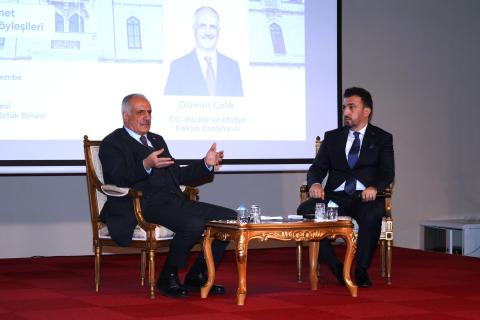
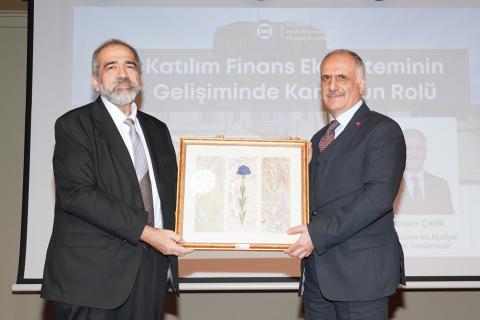
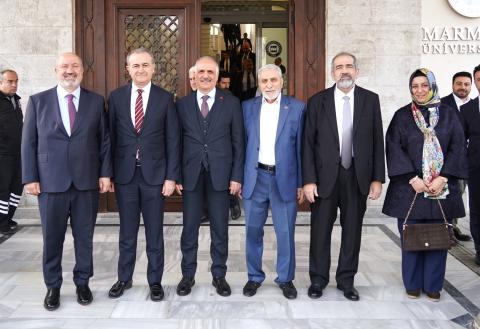
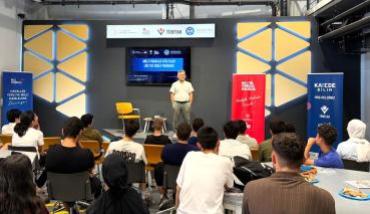
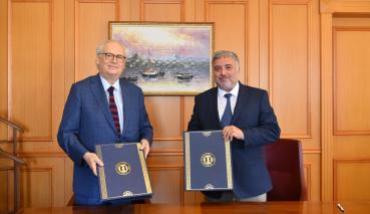
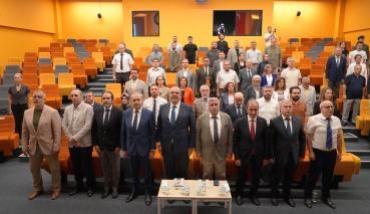
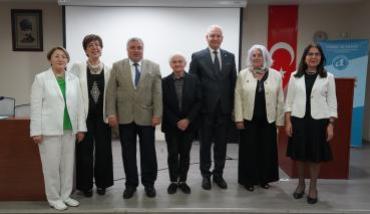
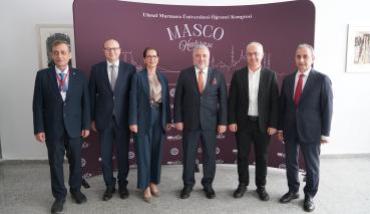
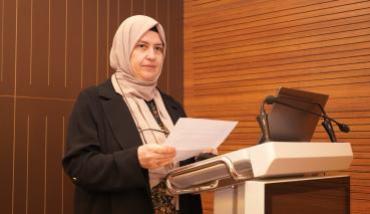
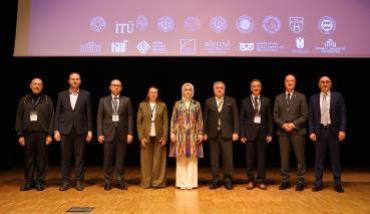
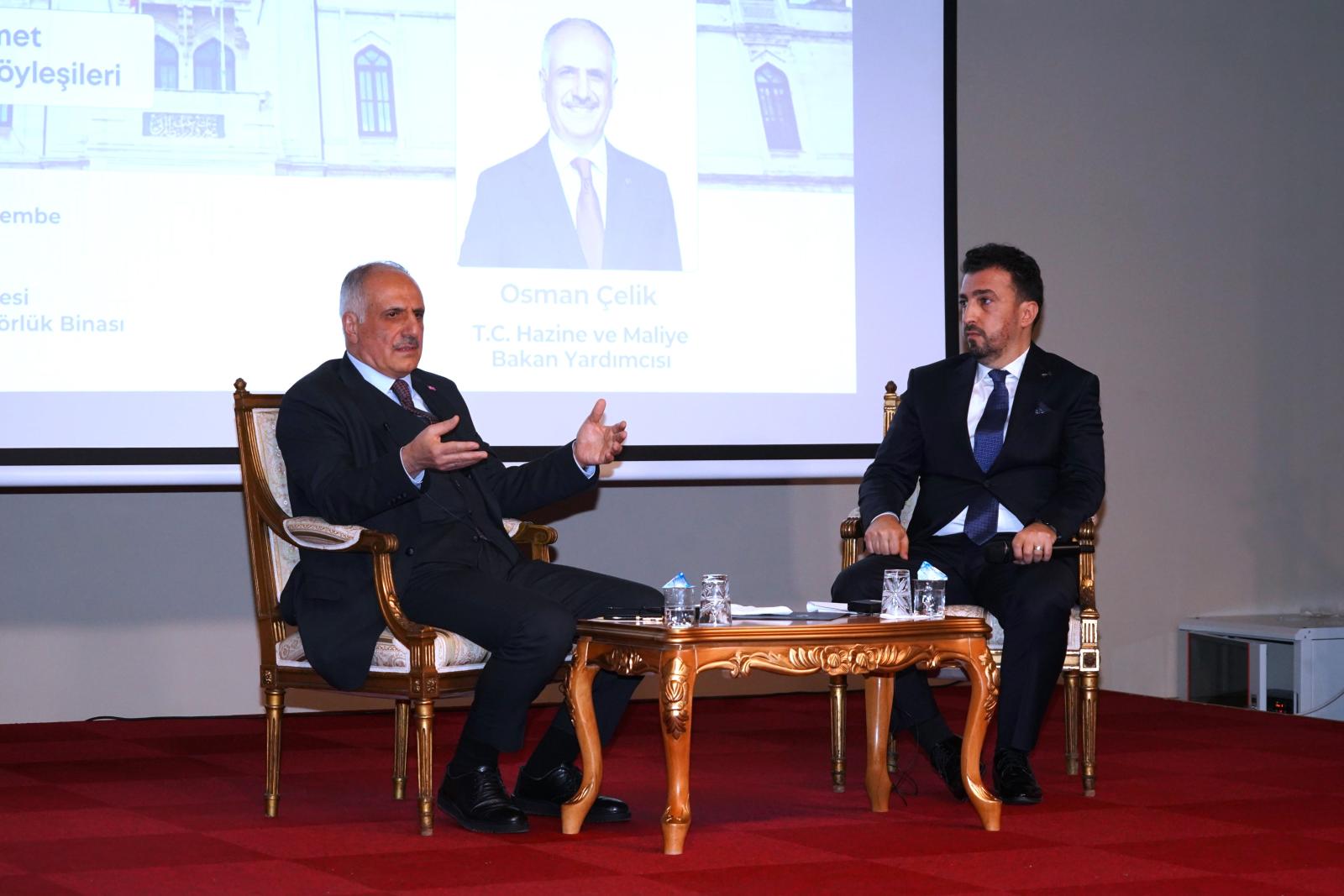
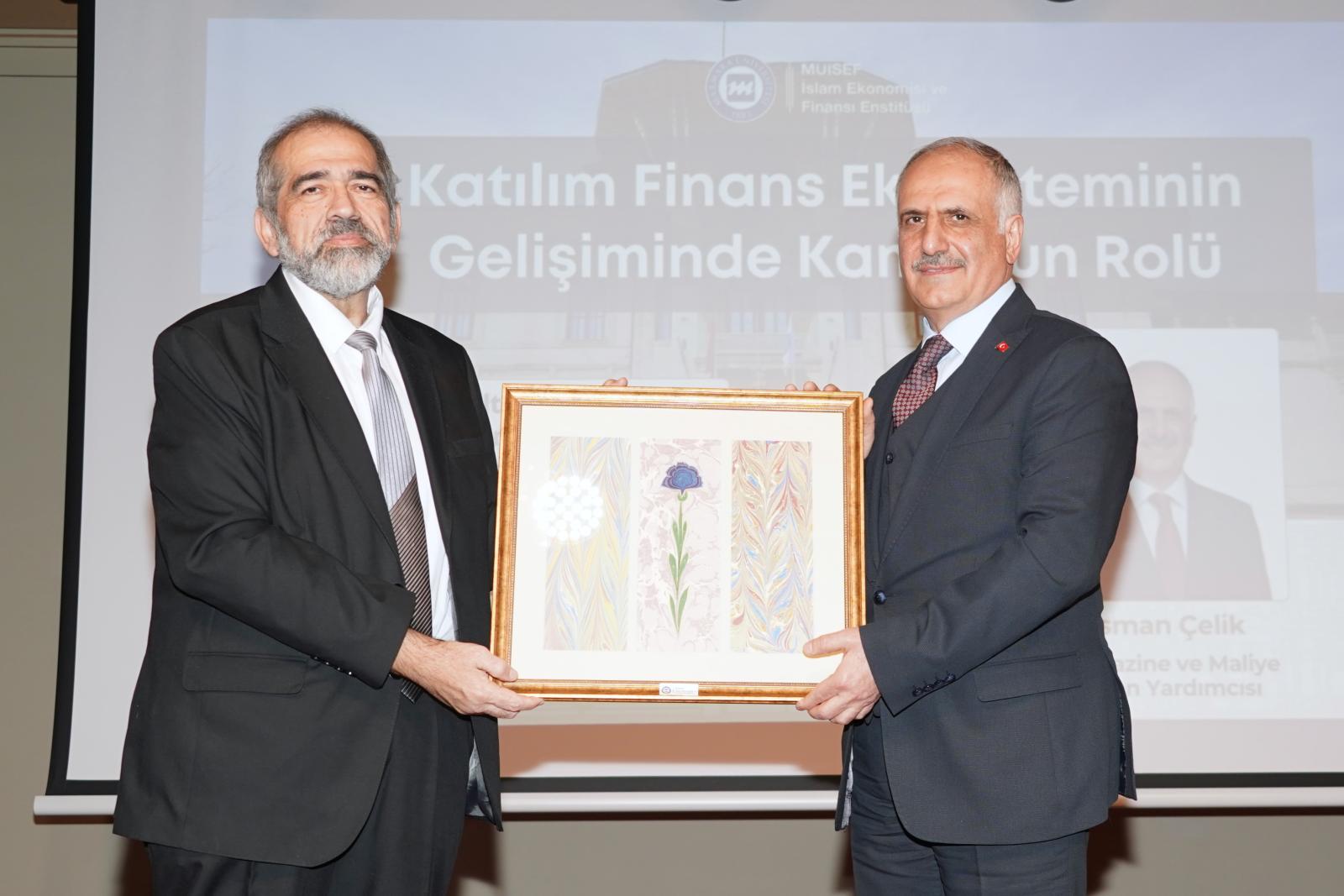
Following the speeches, the program continued with a talk and Q&A session moderated by Assoc. Prof. Dr. Abdulkadir Atar, a faculty member of the institute. The event concluded with a plaque presentation ceremony, during which Marmara University Vice Rector Prof. Dr. Yaşar Kabataş presented a plaque of appreciation to Deputy Minister Osman Çelik. A group photo with the speakers and guests marked the end of the event.