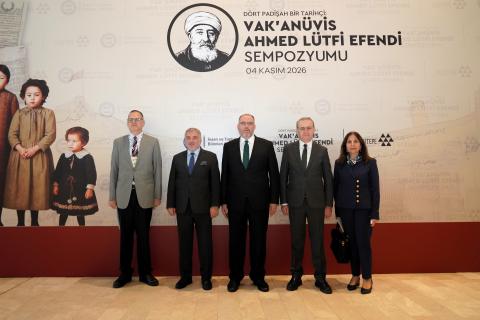
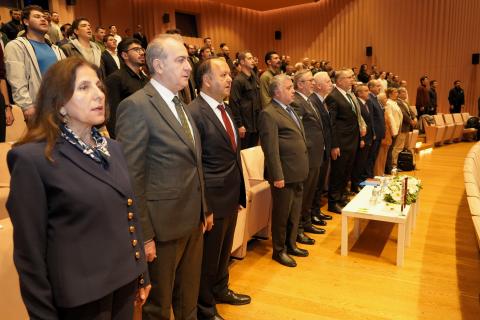
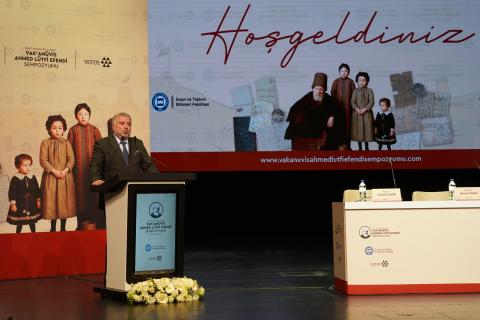
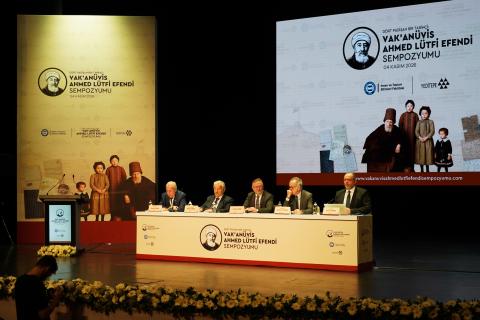
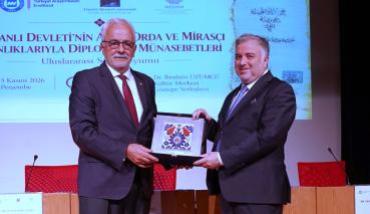
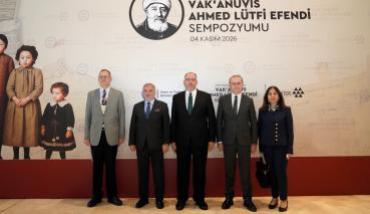
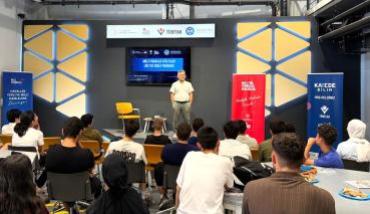
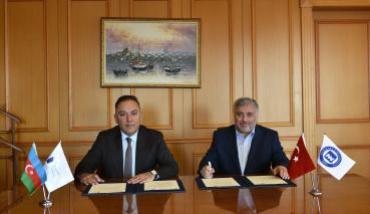
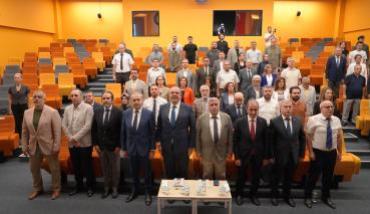
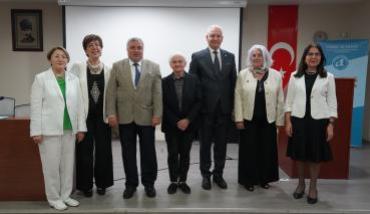
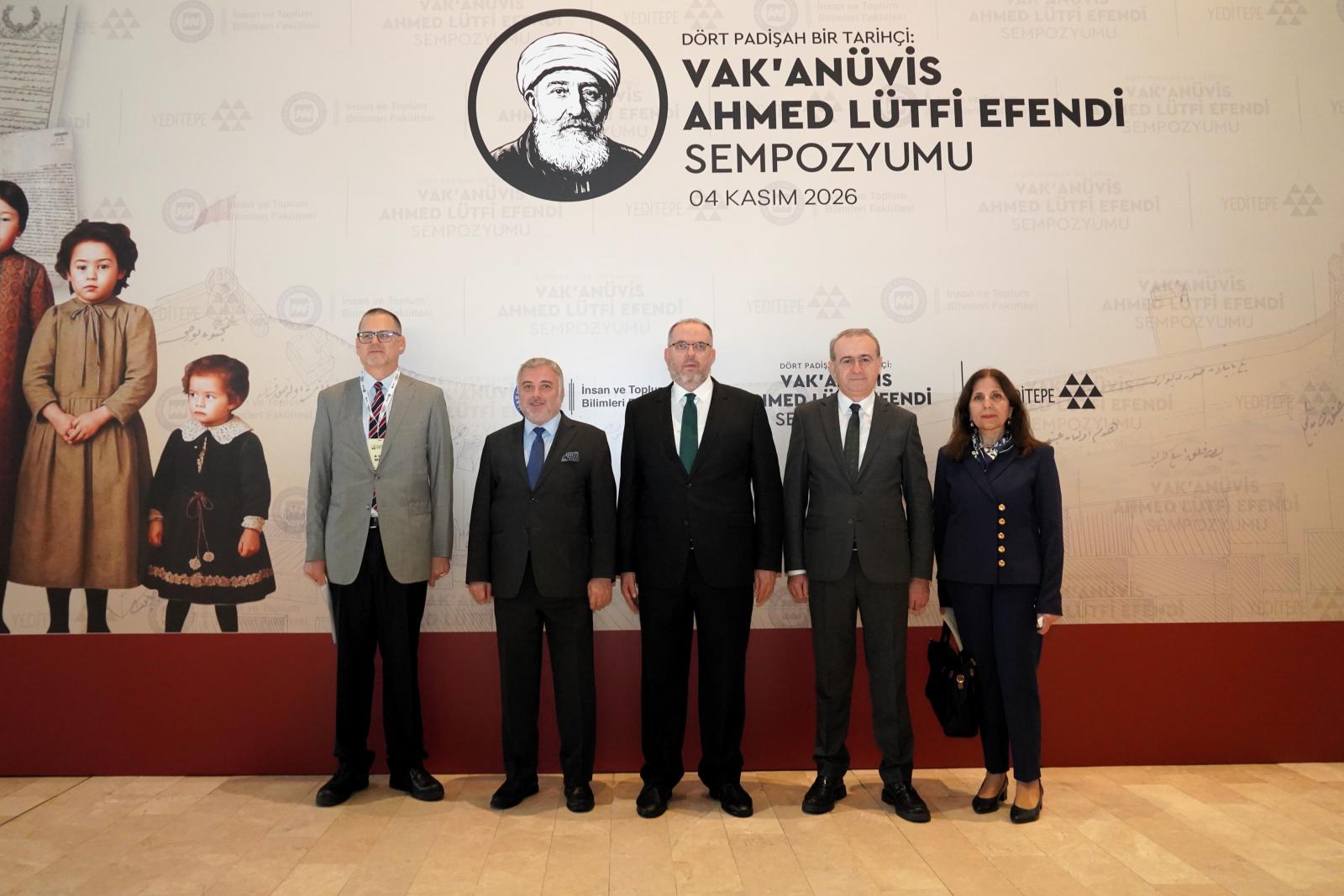
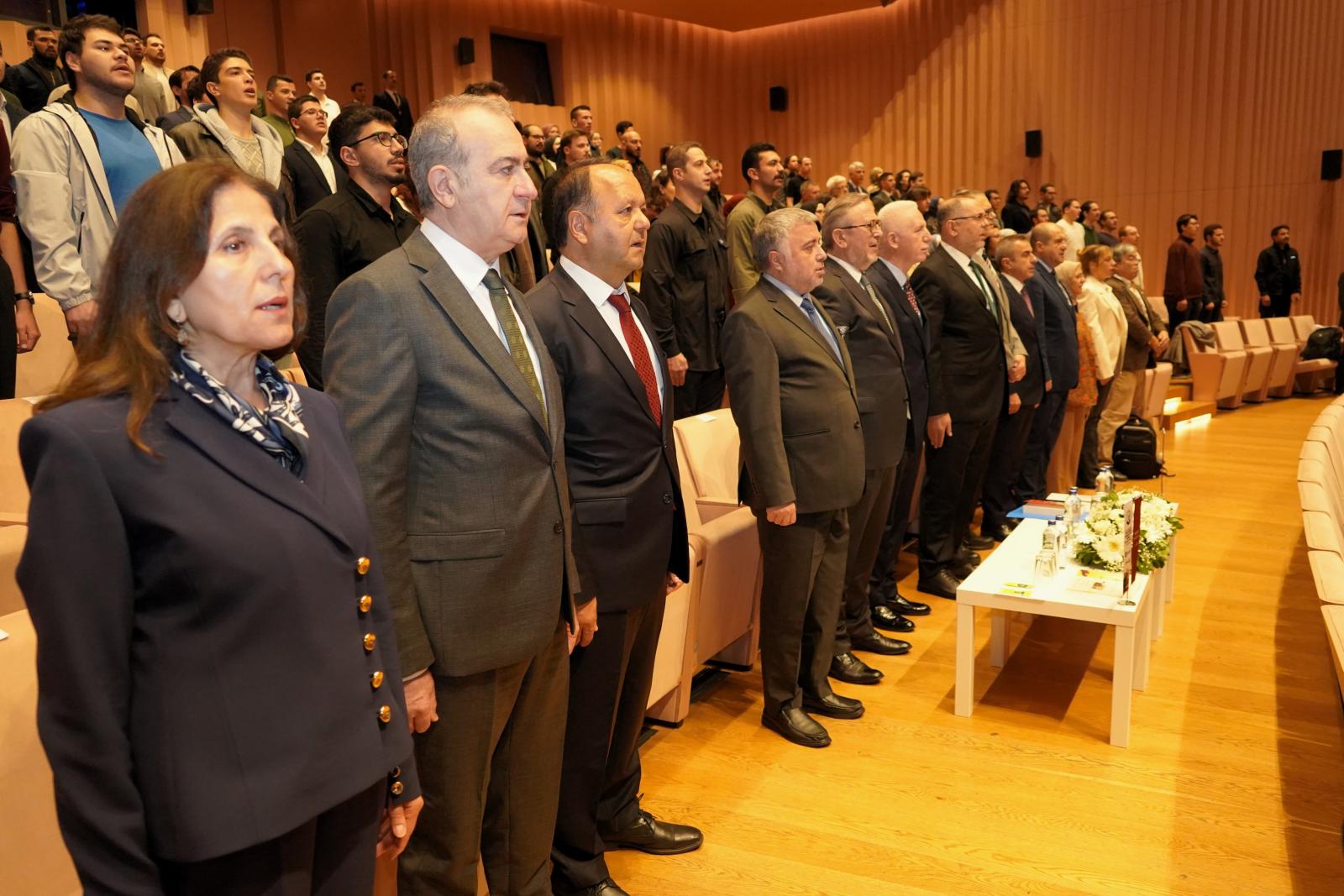
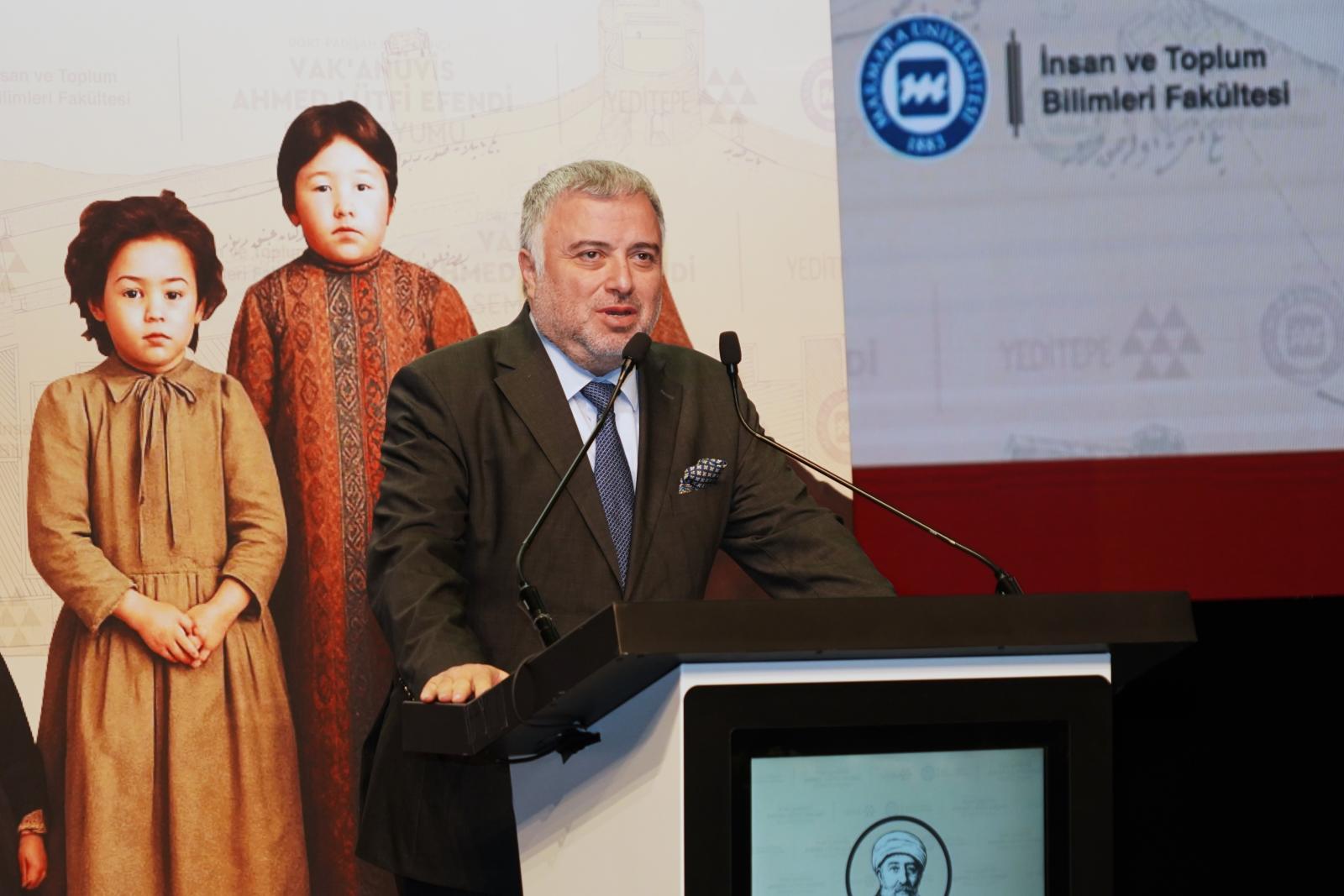
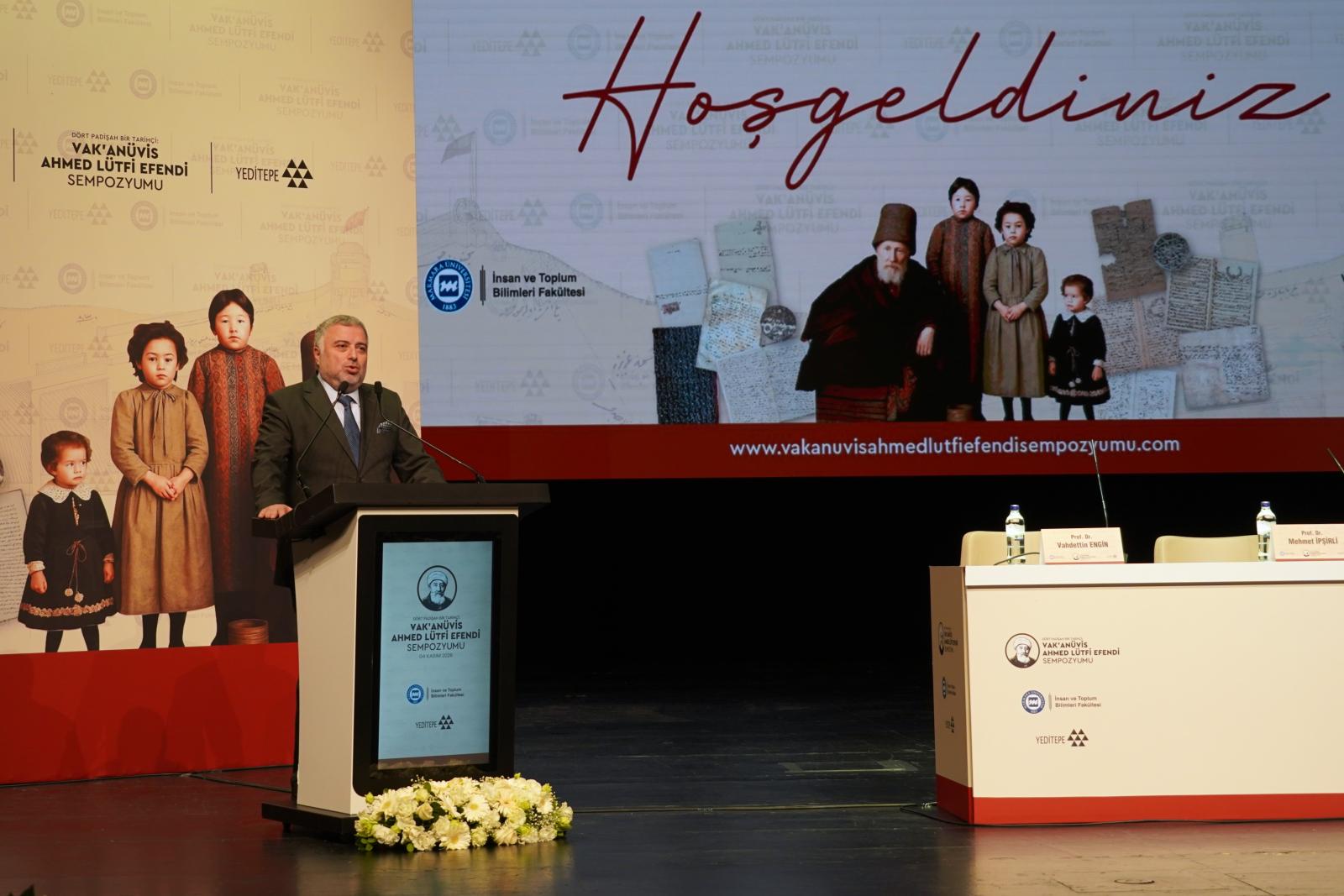
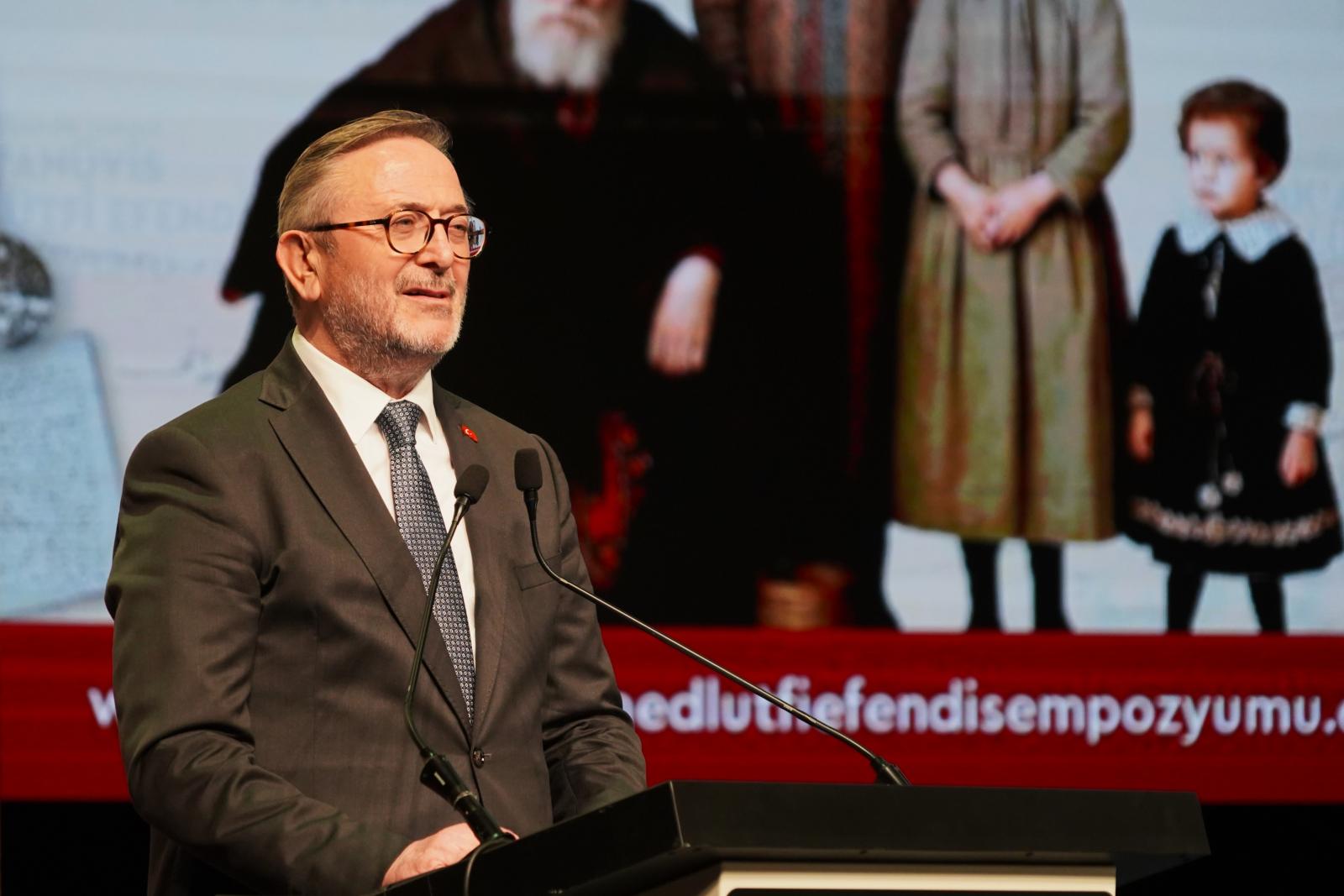
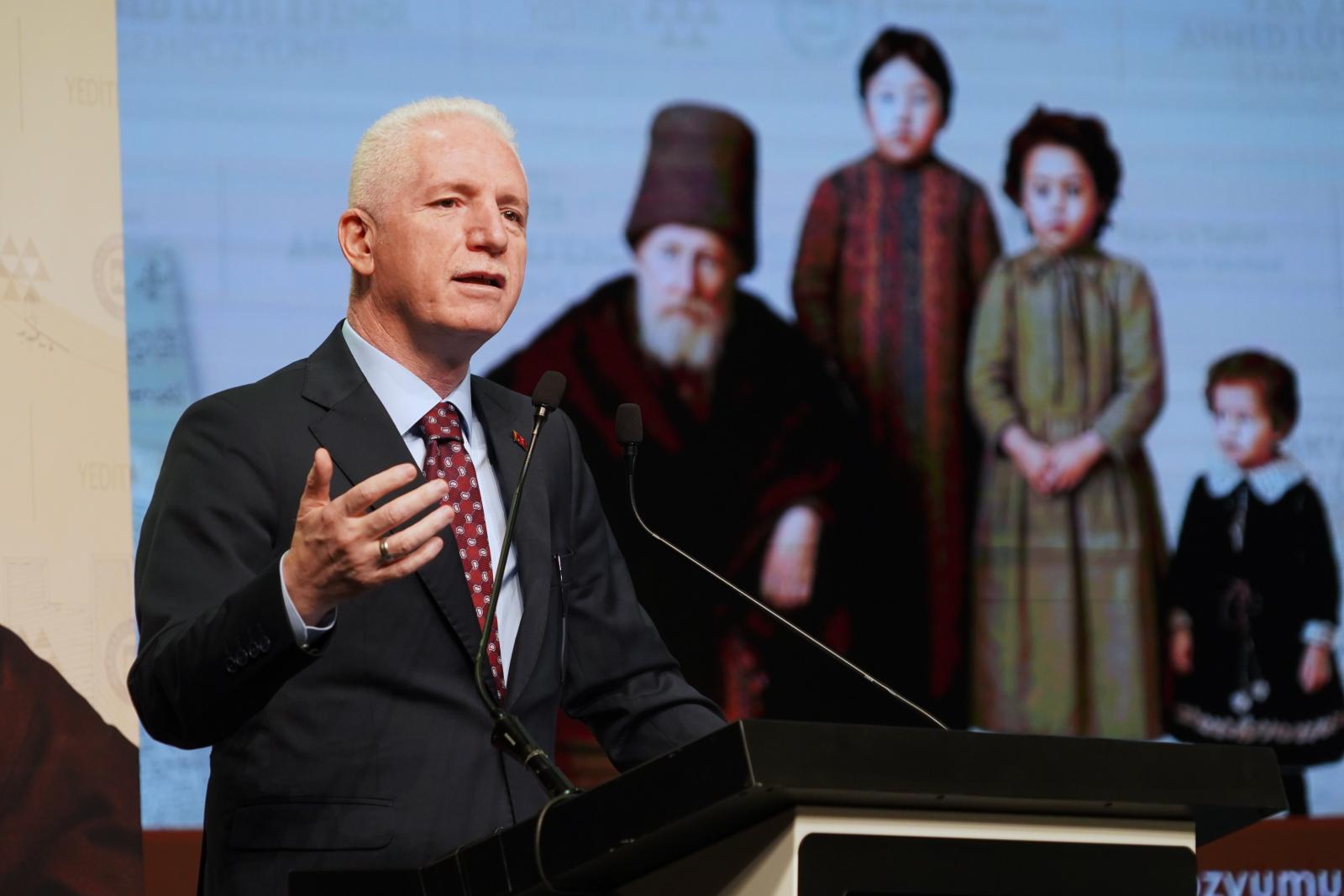
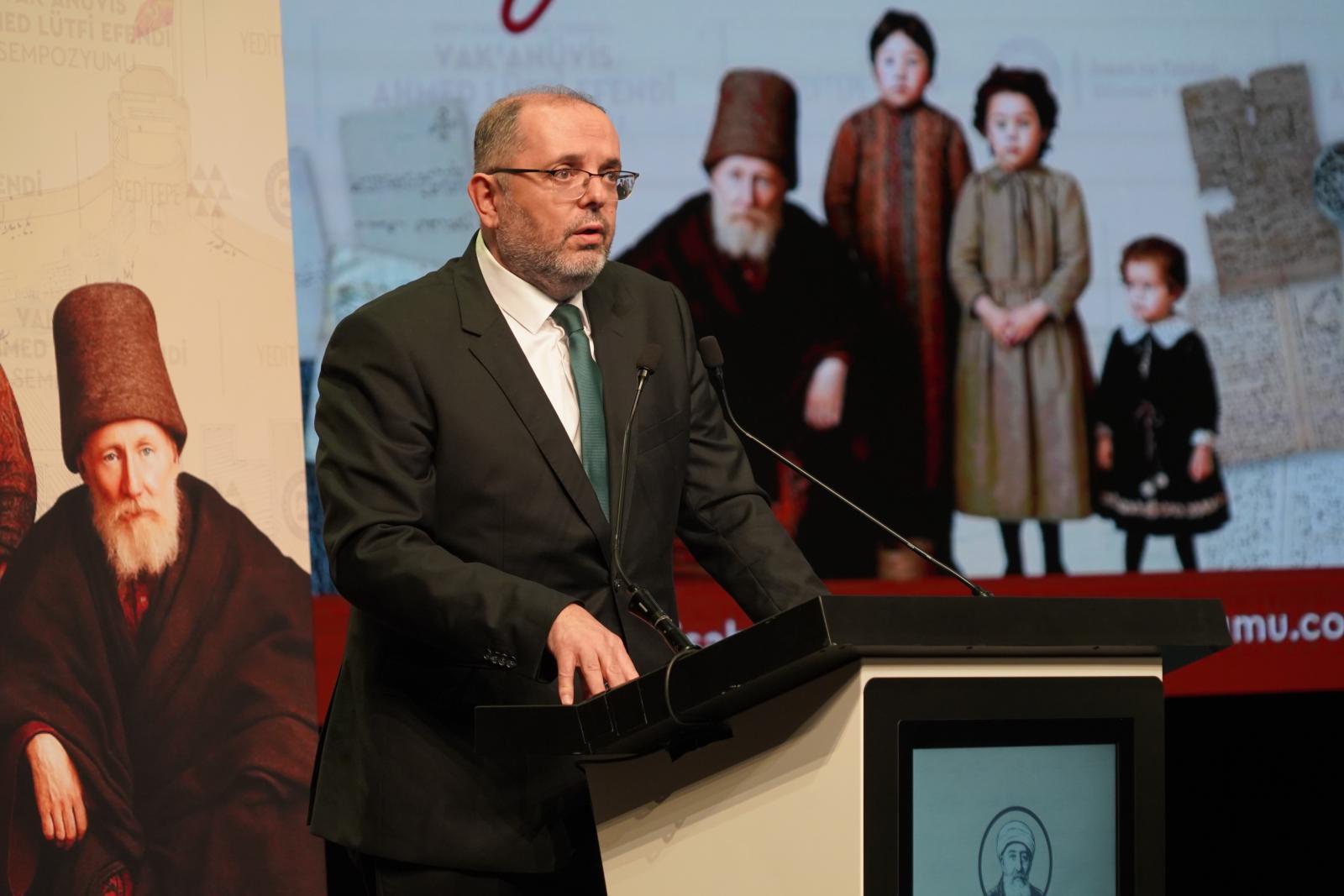
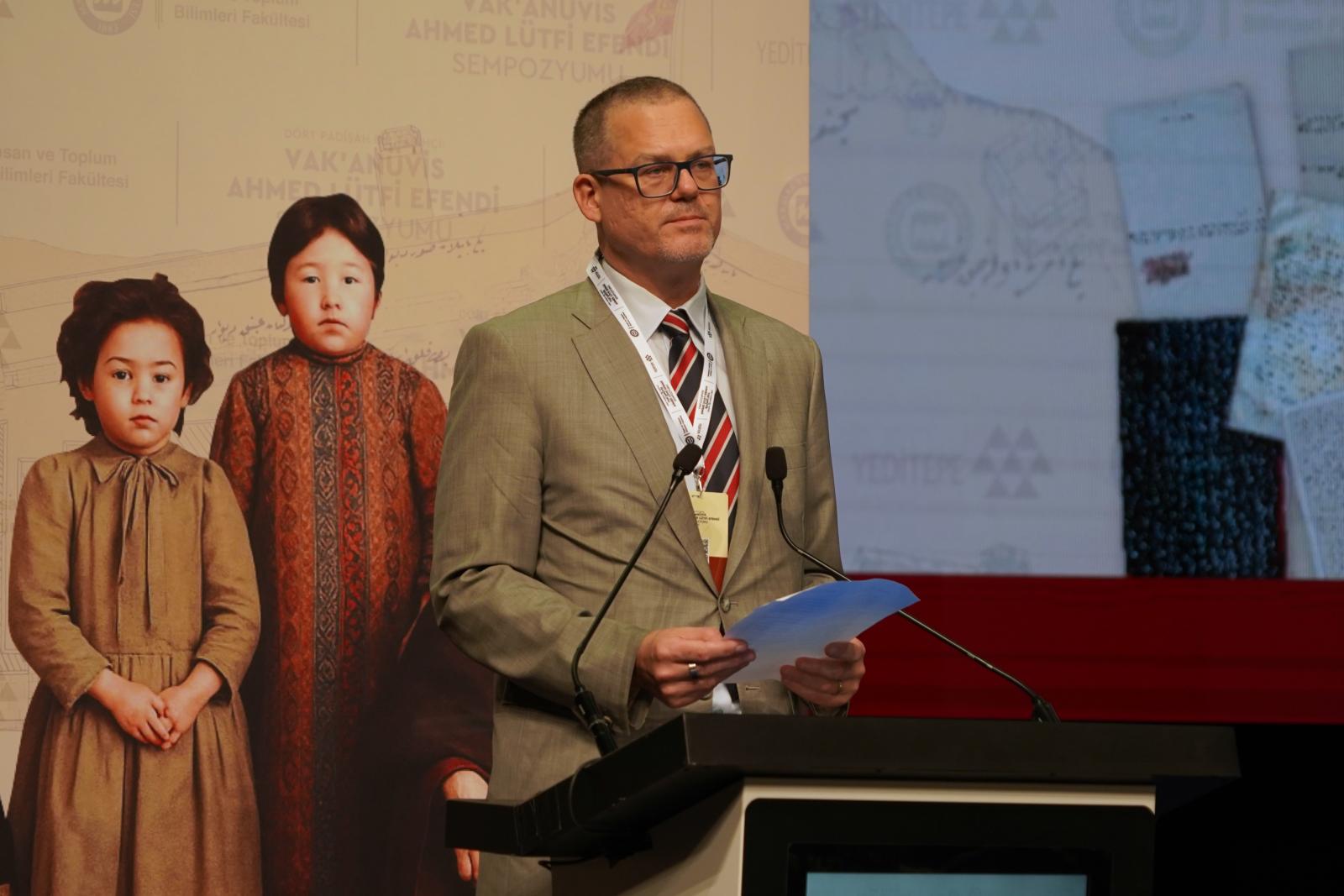
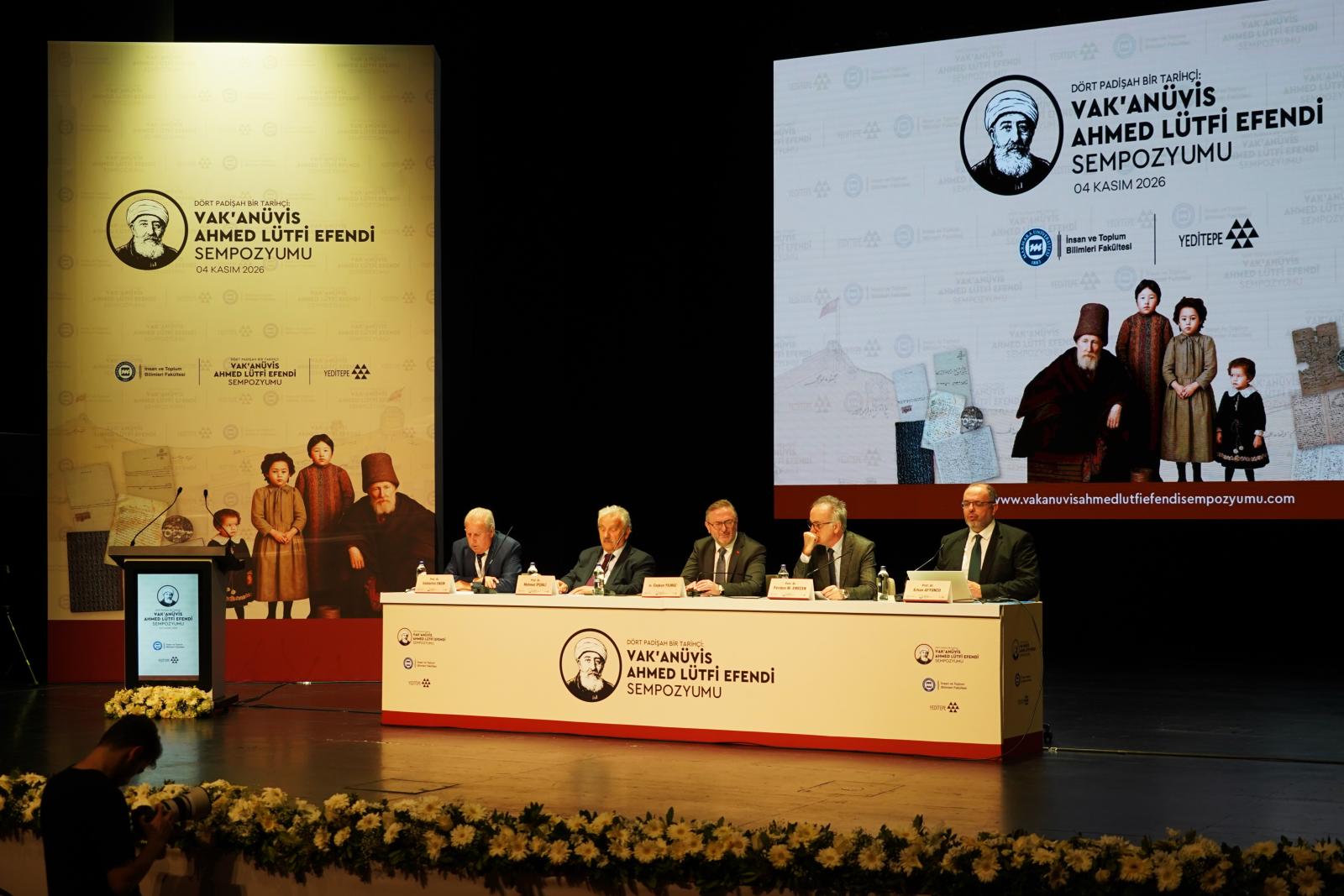
Organized in cooperation with the Marmara University Faculty of Humanities and Social Sciences and Yeditepe Publishing House, the symposium titled “Four Sultans, One Historian: Chronicler Ahmed Lütfi Efendi Symposium” was held on November 4, 2026, at the Istanbul Atatürk Cultural Center.
The symposium opened with the screening of a short film about Ahmed Lütfi Efendi’s life and work as a historian. The event was attended by Deputy Minister of Culture and Tourism Dr Coşkun Yılmaz, Istanbul Governor Davut Gül, Marmara University Rector Prof. Dr Mehmet Emin Okur, National Defence University Rector Prof. Dr Erhan Afyoncu, Marmara University Vice Rector Prof. Dr Yaşar Kabataş, Dean of the Faculty of Humanities and Social Sciences Prof. Dr Sebahat Deniz, as well as numerous academics, students and history enthusiasts.
Rector Okur: “A Deep Historical Heritage Is the Foundation of an Advanced Vision”
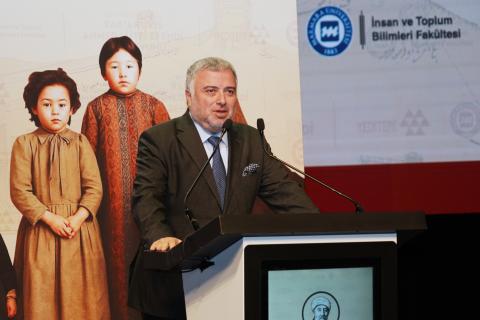
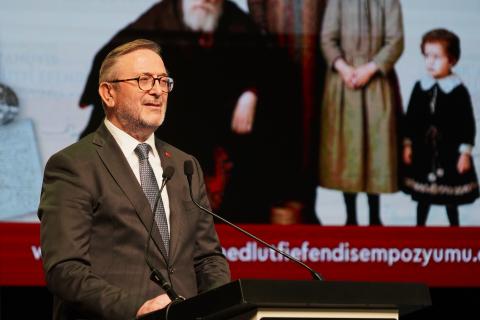
Delivering the opening address, Marmara University Rector Prof. Dr Mehmet Emin Okur stated that Ahmed Lütfi Efendi was not merely a historian but also a scholar, poet and intellectual who represented the collective memory of the nation and the accumulated knowledge of the state. Drawing attention to Marmara University's academic experience in the field of history, Rector Okur expressed his gratitude to Yeditepe Publishing House and everyone who contributed to organizing the symposium.
Emphasising that the knowledge and experience inherited from the past are among the most important resources shaping the future, Rector Okur remarked, “The deeper our historical roots, the more forward-looking our vision will be.” Emphasizing the importance of Ahmed Lütfi Efendi’s scholarly and intellectual legacy, Prof. Dr. Okur underscored the significance of transmitting such values to future generations and concluded his speech by thanking those involved.
Emphasis on Passing Culture down to Future Generations
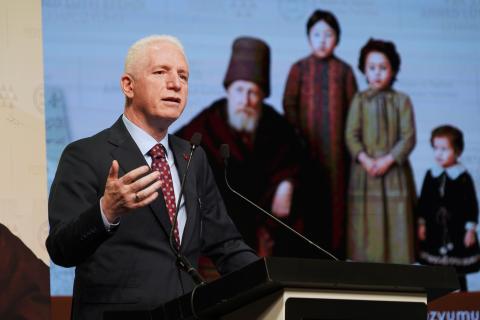
In his speech, Deputy Minister of Culture and Tourism Dr. Coşkun Yılmaz highlighted that culture is a fundamental element in shaping social identity and passing it on to coming generations. Touch upon Ahmed Lütfi Efendi's 41-year tenure as the official court chronicler (vakanüvis), Deputy Minister Yılmaz stated that his life serves as an important example of a merit-based system and historical heritage. Expressing that the symposium holds great value in understanding not only Ahmed Lütfi Efendi but also the historical significance and present-day relevance of his era, Yılmaz thanked those who contributed to the organization.
Governor Gül Drew Attention to Ahmed Lütfi Efendi's Place in Meritocracy and State Tradition
Istanbul Governor Davut Gül stated that Ahmed Lütfi Efendi’s rise from a tradesman’s family to high-level state positions reflected the understanding of merit in the Ottoman Empire. In addition to his role as a historian, Governor Gül drew attention to his identity as a scholar and poet, stating that serving for over 40 years across the reigns of four sultans stands as an important example of continuity in state governance and institutional memory.
Rector Prof. Dr. Afyoncu: “The Longest-Serving Uninterrupted Chronicler in the Ottoman Empire”
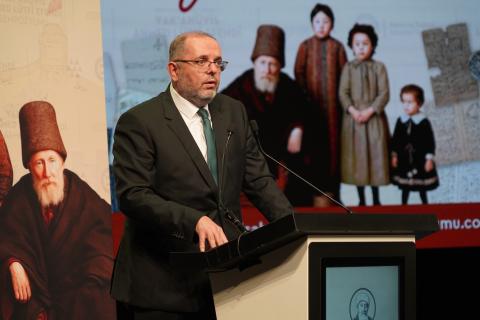
National Defence University Rector Prof. Dr Erhan Afyoncu described Ahmed Lütfi Efendi as the longest-serving uninterrupted official chronicler in the Ottoman Empire, highlighting his roles not only as a historian but also as a statesman, poet and literary figure. Noting that Ahmed Lütfi Efendi had remained relatively little known because he was overshadowed by Ahmed Cevdet Pasha, Rector Afyoncu stated that six of the 15 volumes of his historical work had been translated into modern Turkish. He also regarded Ahmed Lütfi Efendi’s rise from a merchant family to senior positions in the state administration as an important example of the Ottoman understanding of merit.
Ahmed Lütfi Efendi’s Legacy to Be Passed on to Future Generations
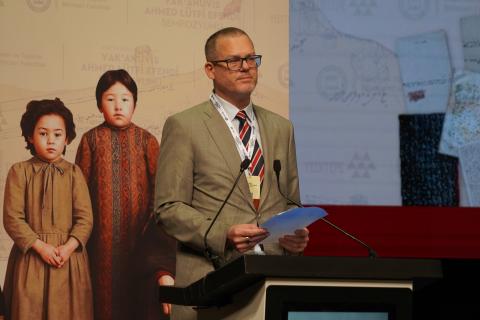
Mehmet Berke Merter, Ahmed Lütfi Efendi’s seventh-generation descendant, stated that his family considered it a responsibility to preserve his memory and pass on his scholarly legacy to future generations. Merter expressed his belief that the symposium would introduce Ahmed Lütfi Efendi’s life and works to a wider audience and pave the way for new research.
Ahmed Lütfi Efendi’s Historiography Examined with International Participation
The symposium brought together approximately 50 Turkish and international scholars to examine the life, works and contributions to historiography of Ahmed Lütfi Efendi, who served as the Ottoman Empire’s official court chronicler for 41 years and documented the reigns of Mahmud II, Abdülmecid, Abdülaziz and Murad V.
The symposium examined various aspects of Ahmed Lütfi Efendi’s contributions to Ottoman historiography, scholarly legacy, bureaucratic career and place in Ottoman cultural life. The event is expected to contribute to more comprehensive research into Ahmed Lütfi Efendi’s legacy as a historian and foster new avenues of research in Ottoman historiography.